Parents often use the terms daycare and preschool interchangeably, but they can mean slightly different things depending on the program.
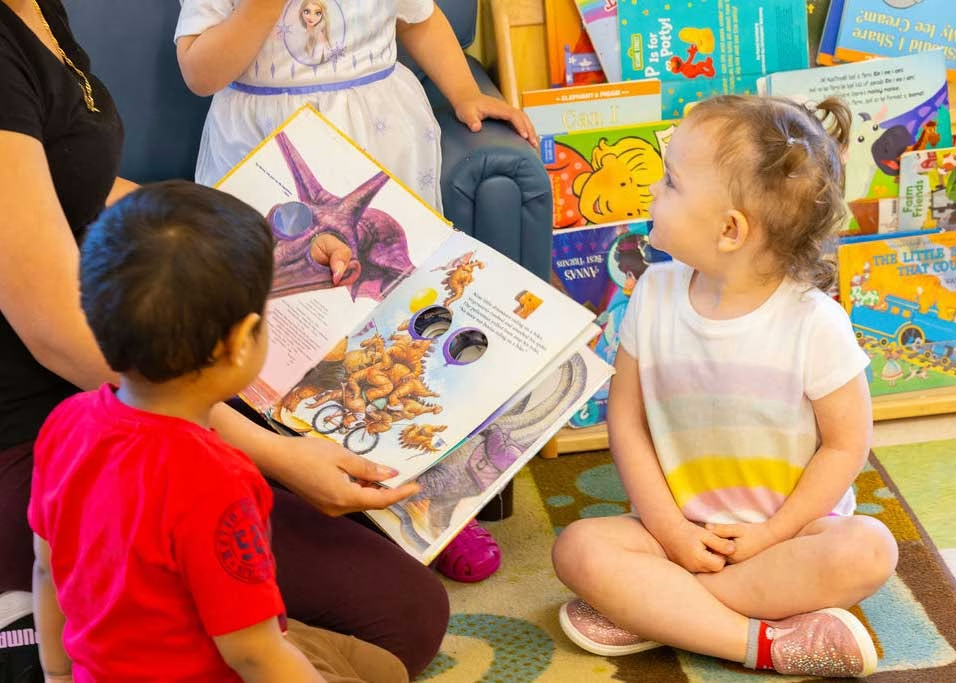
Daycare usually refers to childcare that supports families during the workday. It may include care for infants, toddlers, preschoolers, and pre-K children. A daycare program often focuses on safe supervision, daily routines, meals, rest, play, and social development.
Preschool usually refers to an early learning program for children who are old enough to participate in more structured classroom activities. Preschool programs often focus on language development, early math, fine motor skills, social-emotional learning, independence, and classroom readiness.
The good news is that many modern childcare centers combine both. A high-quality early learning center can provide dependable full-day care while also offering age-appropriate preschool learning experiences.
The Massachusetts EEC learning standards and curriculum guidelines are designed to support children’s social, emotional, and academic development in early education settings.
For families, the better question is not always “daycare or preschool?” Instead, ask: Does this program meet my child’s age, routine, social, emotional, and learning needs?
If your child is younger, infant or toddler care may be the right fit. If your child is approaching kindergarten, a preschool or pre-K classroom may provide the structure and school-readiness support they need.
Our Future Learning Center offers care for multiple early childhood stages. Contact our team to find the right classroom fit for your child.